The Real Reason Flying with Snub-Nosed Dogs Is So Risky (And How to Do It Safely)
Learn why flying with brachycephalic dogs is risky and how to travel safely. Discover essential tips for snub-nosed breeds to ensure a smooth, secure flight.
The High Stakes of Brachycephalic Air Travel
Flying with a snub-nosed dog carries genuine, life-or-death consequences that every owner needs to understand before booking a single ticket. U.S. Department of Transportation incident data, cited by the American Veterinary Medical Association, shows that brachycephalic breeds account for roughly half of all dog deaths during air transport — a striking figure given how small a share of the overall pet population they represent.
The reason comes down to anatomy. Flat-faced breeds like French Bulldogs, Pugs, and Boston Terriers have compressed airways, elongated soft palates, and narrowed nostrils. Under normal conditions, these features cause manageable breathing challenges. Under the stress, heat, and reduced oxygen levels inside an aircraft hold — or even a pressurized cabin — those same features can trigger rapid respiratory distress. There's simply less physiological buffer when something goes wrong.
What many owners overlook, though, is that preparation dramatically changes the risk profile. Correct documentation — a valid health certificate, breed verification, and complete travel requirements organized in advance — prevents tarmac delays, gate rejections, and the kind of prolonged stress that pushes vulnerable dogs toward crisis. A recent journey by Tameah, a French Bulldog who completed the Bermuda-to-Boston route safely using PadsPass, is proof that careful routing and airtight paperwork genuinely make the difference.
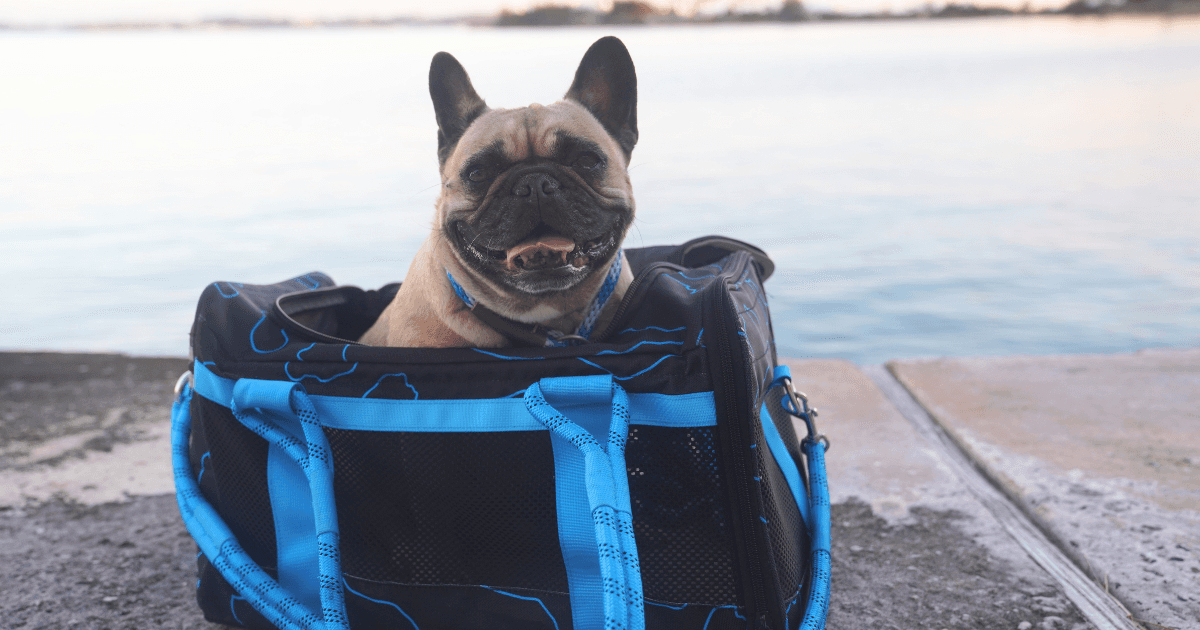
"So flying to or from Bermuda, make sure you definitely download PadsPass, run a flight check so you don't make any mistakes. And if BermudAir flies to your destination, definitely book with them they're the easiest to fly with a Frenchie.” - Viki, dog mom to Tameah
Understanding what qualifies your dog as “snub-nosed” in an airline’s eyes — which isn’t always the same as your veterinarian’s definition — is the essential first step.
Is My Dog Snub-Nosed? The Airline Definition
Not every flat-faced dog looks obviously brachycephalic to a gate agent — and that gap between veterinary classification and airline policy is where owners get caught off guard.
Brachycephalic refers to breeds with anatomically shortened skulls that compress the nasal passages, soft palate, and airway. Vets use imaging and clinical exams to confirm it. Airline gate agents use a breed list printed on a policy document. Those two definitions don’t always match, which is exactly why flying with brachycephalic dogs requires preparation well before you reach the check-in counter.
The ‘snub-nosed’ label is broader than most owners expect. Airlines commonly flag breeds that many owners consider perfectly healthy travelers. PadsPass’s custom travel requirements distinguish between outright banned breeds and restricted breeds — the latter may still fly under strict temperature or carrier conditions. Knowing which category your dog falls into changes everything about how you plan.
Commonly restricted or banned breeds that frequently surprise owners include:
Bulldogs (English, French, American)
Pugs and Pug mixes
Boston Terriers
Shih Tzus and Lhasa Apsos
Boxers
Cavalier King Charles Spaniels
Mastiffs (including the Cane Corso and Dogue de Bordeaux)
Chow Chows
Brussels Griffons
And it isn’t just dogs: flat-faced cats — Persians, Himalayans, and Exotic Shorthairs — appear on the same restricted lists for the same anatomical reasons.
Pro Tip: Mixed-breed dogs are a genuine gray area. If your dog has any brachycephalic ancestry, check with your veterinarian before assuming the restrictions don’t apply to your dog or cat.
Every carrier draws these lines differently. British Airways, for example, doesn’t accept pets in the cabin at all — only recognized assistance dogs — so pets fly via its cargo arm, IAG Cargo, which maintains separate restrictions for “dangerous dog breeds” and “snub-nosed breeds” of cats and dogs, and requires snub-nosed animals to travel in a container at least 10% larger than the standard minimum. A restricted breed might still travel under specific conditions, while a banned breed has no commercial option at all. Because logistical breakdowns hit flat-faced breeds hardest, confirming your dog’s classification early is non-negotiable.
Why Cargo Bans Are Becoming the Industry Standard
Cargo bans on brachycephalic breeds aren’t a fringe policy anymore — they’ve become the dominant industry response to an undeniable safety record. According to the AVMA, Delta, United, and American Airlines have all implemented permanent bans or strict seasonal restrictions on snub-nosed breeds traveling in cargo holds (on routes where cargo travel is permitted like Puerto Rico). The reasoning is straightforward: airlines are no longer willing to absorb the legal and reputational liability that comes with high in-flight mortality rates among these dogs.
The policy gap is especially sharp for owners searching for international airlines that allow snub-nosed dogs, since even carriers that technically permit brachycephalic breeds in cargo frequently suspend those permissions entirely during warmer months. These seasonal heat embargoes — typically running May through September — apply to any route where ground temperatures at departure or arrival could exceed 75–85°F. In practice, that window eliminates most of the year for owners in southern states or those flying to warm-weather destinations. As flight diversion data increasingly shows, even climate-controlled cargo holds carry unpredictable risks for flat-faced breeds.
Warning: Heat embargoes are not always posted prominently on airline websites. A route that appears open in the booking system may be blocked at check-in due to forecasted temperatures — with no refund guaranteed.
For many owners, this regulatory landscape effectively narrows the options to two: in-cabin travel for dogs under the carrier’s size limit, or a private charter for larger breeds with no viable commercial alternative.
The Fit-to-Fly Window: Your Hardest Deadline
Health documentation is one of the highest-stakes logistics challenges for snub-nosed dogs — and the window for getting it right is narrow. Most destinations require an accredited veterinarian to issue the health certificate within a set window before travel — often 10 days, sometimes less — and many require a government endorsement on top of the vet’s signature. The exact rules vary by destination. A certificate signed on day one may be worthless if a flight gets rescheduled to day eleven — so build your travel calendar backward from your departure date, not forward from your vet’s availability.
The paperwork margin for error is effectively zero. A single typo on a rabies certificate — a wrong microchip digit, an outdated vaccine date — can trigger quarantine upon arrival, regardless of how healthy your dog actually is. Many owners also confuse the need for a Government issued health certificate with an EU-recognized travel credential, only discovering the difference at the border.
For brachycephalic breeds, last-minute scrambling isn’t just a paperwork problem. Racing your dog to a vet appointment two days before a flight elevates anxiety — and in these breeds, anxiety directly worsens respiratory distress. The PadsPass Digital Pet Passport centralizes certificate expiration dates, endorsement timelines, and breed-specific requirements in one place, so the fit-to-fly window stays visible before it becomes a crisis.
Airlines That Still Welcome Snub-Nosed Dogs
Not every carrier has shut the door on brachycephalic breeds — but the ones that remain open have built meaningful guardrails around that access, and knowing those guardrails is everything.
Being “allowed” on an airline is not the same as being cleared to fly. Documentation, breed verification, and physical condition are all still gatekeepers, regardless of whether a carrier’s policy technically permits snub-nosed dogs. And because brachycephalic dogs have a much lower tolerance for heat and stress, in-cabin travel — where temperature and airflow are controlled — is the far safer option whenever it’s available.
Here’s how the options look on routes PadsPass verifies today:
BermudAir accepts dogs and cats in the cabin on routes linking Bermuda with the US, Canada, and Anguilla — up to four soft-sided carriers per flight, so space runs out and early booking matters. Certain breeds are restricted or prohibited depending on the destination;
interCaribbean Airways allows small dogs and cats in the cabin when pet and carrier together weigh 15 lbs (8 kg) or less.
AeroMexico accepts snub-nosed dogs and cats in the cabin — within a combined pet-and-carrier limit of 9 kg (19.8 lbs), generally on flights under six hours.
Most US carriers have banned snub-nosed breeds from cargo entirely, leaving in-cabin as the only option.
Specialized pet charter services represent the gold standard for this travel challenge. Operators flying dedicated animal charters — with climate-controlled cabins, continuous monitoring, and no commercial cargo pressure — remove nearly every risk factor that makes brachycephalic air travel dangerous, including customized carrier placement that commercial airlines simply cannot replicate.
Airline | Policy | Key Constraint |
|---|---|---|
BermudAir | Dogs & cats in cabin | 4 carriers per flight; destination breed lists apply |
interCaribbean | Small pets in cabin | 15 lb combined limit; Bulldogs & Mastiffs prohibited |
Aeromexico | Snub-nosed pets in cabin only | 9 kg (19.8 lb) combined limit; banned from the hold |
Most US carriers | Banned in cargo | In-cabin only if permissible; weight limits exclude larger breeds |
Pet charter services | Fully accommodating | Cost; advance booking required |
Choosing an In-Cabin Carrier: Your Dog’s Safest Seat
Since in-cabin is the only commercial option for most snub-nosed breeds, the carrier under the seat — not a cargo crate — is the single most controllable variable in your dog’s in-flight safety equation.
Here’s what to look for:
Airline-compliant dimensions, checked route by route. Under-seat space differs by aircraft and carrier. One common pet travel mistake is assuming a carrier that passed a previous flight will automatically meet a new airline’s specifications — always recheck what makes a carrier acceptable for in-cabin travel before every booking.
Ventilation on at least three sides. A single mesh door is inadequate for a dog that pants heavily at rest — look for cross-flow from multiple mesh panels.
Structure that protects internal space. For heavier dogs and cats near the size limit, a structured soft-sided carrier like the Roverlund holds its shape under the seat, preserving headroom and airflow instead of collapsing onto your pet.
Acclimation starting weeks out. High-anxiety snub-nosed dogs need to associate the carrier with calm before travel day. Feed meals inside it, add a worn t-shirt for scent comfort, and practice short closures building up to several hours.
Zero sedation. The AVMA explicitly warns against sedating brachycephalic dogs for air travel — sedatives depress respiratory function, which is already compromised in these breeds.
How PadsPass Automates Snub-Nose Compliance
Documentation errors are one of the leading reasons brachycephalic dogs get turned away at the gate — and they’re almost entirely preventable with the right system behind you.
PadsPass functions as a compliance co-pilot for snub-nose owners, handling the paperwork precision that most pet parents simply don’t have the bandwidth to manage alone. At the core of the platform is AI-powered veterinary record extraction that cross-references every field in a health certificate against real-time international travel requirements before any government ever sees it. A mismatched breed classification, an expired rabies vaccination, a missing endorsement — these are the small mistakes that ground trips. PadsPass catches them first.
Route-specific requirement tracking adds another layer of protection. Because breed restrictions vary so sharply between carriers and countries — as covered in the earlier sections of this guide — a route that works for one breed may have entirely different thresholds for a French Bulldog. PadsPass accounts for those breed-level variables automatically, flagging restrictions that generic pet travel checklists routinely miss. It’s exactly how Tameah’s Bermuda-to-Boston trip generated snub-nose-specific health requirements and cleared airline check-in without refusal.
Conclusion: Navigating the Complexity with Confidence
Flying with a snub-nosed dog is genuinely achievable — but only when pet owners treat preparation as a non-negotiable, not an afterthought. Breed restrictions shift without notice, documentation windows are unforgiving, and a single routing error can strand your dog at the gate.
The biggest mistake brachycephalic dog owners make is optimizing for price instead of safety. A cheaper itinerary with a tight layover in a hot-weather hub — or with a carrier that quietly bans your breed — is not a bargain. It’s a liability. When the route works against your dog’s physiology, no amount of preparation fully compensates. Prioritizing a direct flight on a breed-permissive airline, even at a higher fare, is the single most impactful decision you can make.
The good news is that the complexity is manageable. Breed confirmation, compliant routing, organized health records, and airline-specific carrier requirements are all learnable, trackable, and — with the right tools — automatable. Snub-nosed dog air travel doesn’t have to feel like guesswork every time you book.
Download PadsPass and complete your pet’s profile first — microchip number, first scan date, and latest rabies vaccination — so every trip starts from verified records, and you arrive at the gate prepared, not scrambling.