The Real Reason Your EU Pet Passport Might Fail at the Border (And How to Fix It)
May 26, 2026
Don’t get turned away at the border. Learn why your EU pet passport might fail, how to verify its validity, and the essential steps for stress-free pet travel.
The CDG Reality Check: Why Pet Travel Just Got Harder
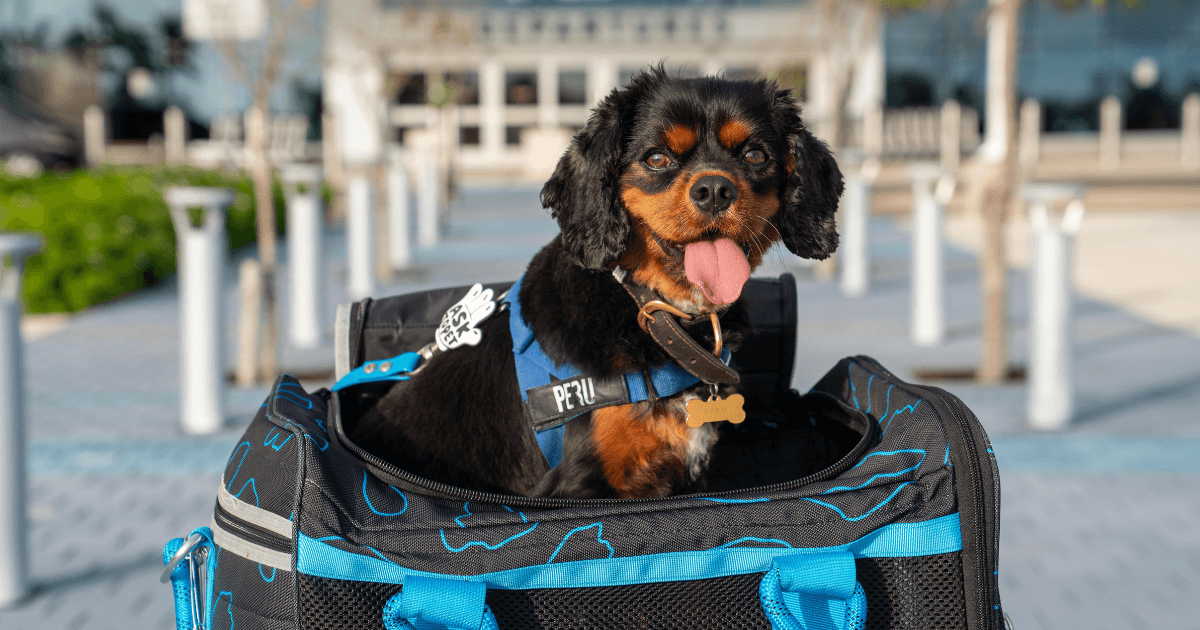
A Cavalier King Charles Spaniel waiting in his travel bag outside the airport
Arriving at Charles de Gaulle with a perfectly vaccinated dog and a folder full of paperwork — only to be turned away at the border — is every pet traveler’s worst nightmare. And in 2026, that scenario is becoming less of a horror story and more of a daily reality.
The shock isn’t just emotional. It’s logistical and financial. In practice, border agents don’t weigh your good intentions — they scan documents against a rigid compliance checklist. One missing stamp, one mismatched date, one document issued under an outdated framework, and your pet goes nowhere. For US-based travelers trying to understand how to get an EU pet passport in USA — or whether that’s even the right document to pursue — the confusion is entirely understandable.
⚠ Warning: Starting April 22, 2026, new EU entry rules take effect that fundamentally change what counts as valid documentation for international pet arrivals. Documents that cleared borders last year may be rejected outright this year.
What’s shifting isn’t just paperwork — it’s an entire compliance philosophy. The EU is moving toward what travel experts are calling an identity-first model: your pet’s microchip record, vaccination history, and issuing country must all align precisely before entry is granted. A single inconsistency triggers a hold.
Before you pack a travel checklist for your dog or cat, it’s worth understanding exactly which documents still hold legal weight at EU checkpoints — and which ones don’t. The next section breaks down the single most common misconception travelers carry to the gate.
Is My EU Pet Passport Still Valid? The 2026 Truth
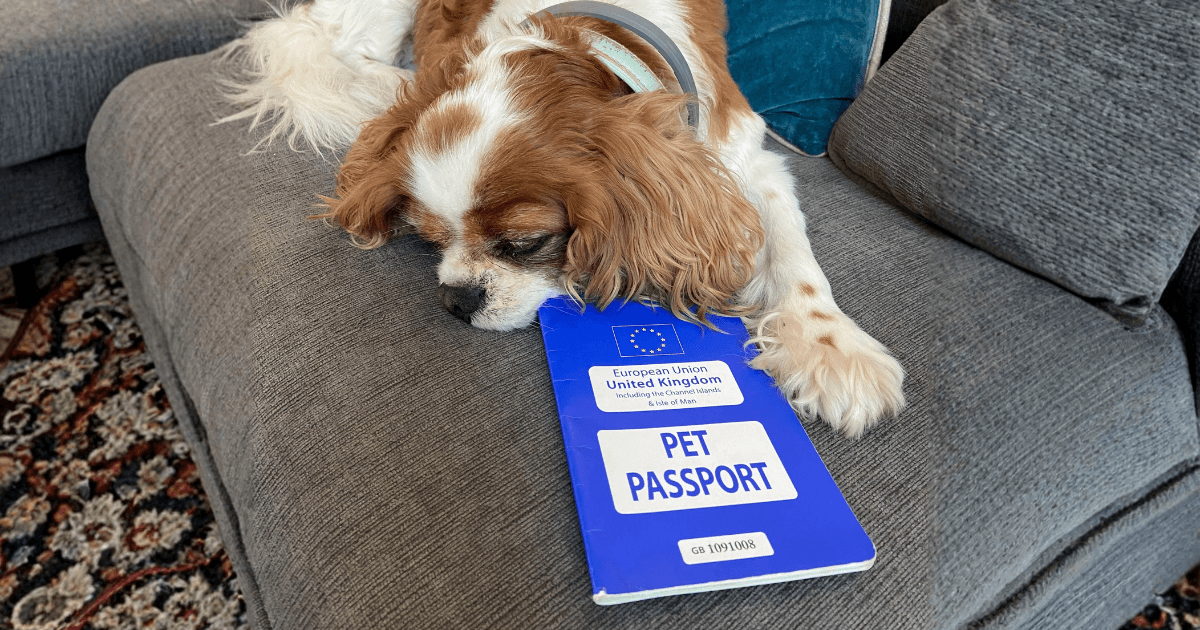
A Cavalier King Charles Spaniel on a couch, her EU pet passport beside her
If you’re asking “is my EU pet passport still valid,” the answer depends entirely on where that passport was issued — and for many travelers, the answer is a hard no.
The single biggest source of border confusion right now stems from two distinct traveler groups who incorrectly assume their documents qualify.
GB-Issued Passports Are Officially Dead. According to the UK Department for Environment, Food & Rural Affairs (Defra), EU Pet Passports issued in Great Britain are no longer valid for travel to EU countries or Northern Ireland. Full stop. Brexit severed GB from the EU’s pet travel framework, meaning those blue-and-gold booklets millions of British pet owners once relied on are now worthless at any EU border crossing.
The “Third Country” Trap for US Residents. American travelers face a different but equally frustrating reality. The United States is classified as a third country under EU law, which means US-based pet owners cannot obtain or use an EU Pet Passport at all — regardless of what’s available online.
Here are the most common invalidity triggers to watch for:
Passport issued in Great Britain after Brexit transition
US or non-EU country of residence at time of issuance
Expired or incomplete rabies vaccination records within the passport
Missing tapeworm treatment documentation for UK-bound travel
Onward EU travel within 4 months of initial entry without updated health checks
The AHC Alternative. For GB and US travelers, the required document is an Animal Health Certificate — a single-trip document issued by an accredited vet, valid for a specific journey only. Unlike a passport, it doesn’t accumulate records over time.
Understanding what invalidates your paperwork is only half the battle. What truly trips up even well-prepared travelers is a much more specific sequencing requirement — one that starts before the rabies vaccine is even administered.
The Microchip-First Rule: The Mistake That Costs Thousands
The single most common reason pets are turned away at EU borders is a sequence error that takes less than five minutes to prevent — but thousands of dollars to fix after the fact.
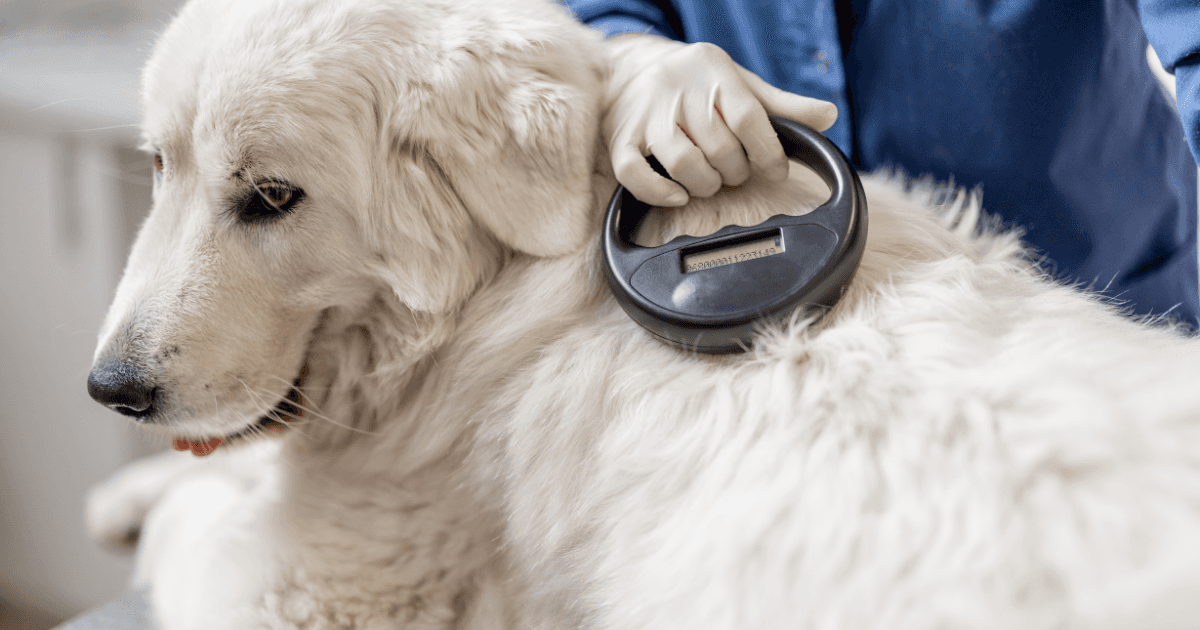
A dog having its microchip scanned
According to the French Ministry of Agriculture and Food, a rabies vaccination is only legally valid when administered after the microchip has been implanted and scanned. Not the same day. After. The order is non-negotiable.
Here’s what the compliant sequence looks like:
Microchip implanted — ISO 11784/11785 standard, 15-digit code
Microchip scanned and recorded — number logged by the vet
Rabies vaccination administered — only now does it count legally
Waiting period observed — typically 21 days before travel
If your vet gave the rabies shot first — even by one hour — your entire vaccination record is legally void in the EU.
Backdating won’t help. EU border systems cross-reference microchip implant dates against vaccination timestamps in digital registries. Discrepancies flag immediately, and border officials are trained to catch them.
The financial fallout is severe. Emergency re-vaccination abroad, mandatory quarantine fees, and rebooking flights can easily run $2,000–$5,000 per trip. That’s before factoring in the eu pet passport cost of starting the documentation process from scratch.
Pro Tip: Before any vet appointment, confirm in writing that microchip implantation will precede all vaccinations. Request a timestamped receipt for each procedure as a separate line item.
Verifying this sequence manually is surprisingly easy to get wrong — which is exactly why tools like PadsPass AI check microchip-vaccination order automatically, flagging compliance gaps before you ever reach a checkpoint. That kind of pre-departure verification matters even more once you understand what documentation Americans specifically need — and whether a US-issued passport even qualifies.
Can Americans Actually Get an EU Pet Passport?
The most searched question among US-based pet owners preparing for Europe travel is: how do I get EU pet passport in USA? The short answer is that you cannot — and understanding why saves a great deal of confusion and expense. American pet owners cannot obtain an EU Pet Passport from the United States — and confusing this fact with available options is one of the most expensive border mistakes travelers make.
The legal reality: An EU Pet Passport is issued only by an authorized veterinarian inside the European Union, to a pet that is physically present at that appointment. There is no remote process, no embassy workaround, and no way to apply from home. If you see any service offering a “US EU Pet Passport,” stop — it doesn’t exist.
Myth | Reality |
|---|---|
Americans can get an EU Pet Passport online | Impossible — issuance requires an EU-based vet |
A USDA health certificate is a “Pet Passport” | It’s a domestic travel document, not EU-recognized |
One certificate covers unlimited EU trips | 100% of non-EU pet owners must obtain a new health certificate for every single entry |
EU Pet Passports are cheaper for Americans | The required AHC typically costs more per trip |
The mandatory bridge document for US travelers is the Annex IV Animal Health Certificate (AHC) — an officially recognized EU-format document completed by a USDA-accredited veterinarian and endorsed by your USDA APHIS regional office. This is what border agents actually accept.
Cost breakdown matters here. An AHC typically runs $150–$300 in vet fees plus a USDA endorsement fee, compared to roughly €30–€70 for an EU Pet Passport issued locally. However, understanding how long does an EU pet passport last compared to the AHC reveals another critical difference — and that gap becomes especially painful when timing goes wrong, which is exactly what the next section unpacks.
The 10-Day Window: Navigating the AHC Expiry Trap
Timing the Animal Health Certificate correctly is one of the most unforgiving requirements in EU pet travel — and one of the easiest to get wrong.
Timeline at a glance:
Day 1: Vet issues the AHC
Days 1–10: Certificate is valid for EU border entry
Day 11+: Certificate is void — your pet cannot enter
After entry: The AHC remains valid for onward EU travel for 4 months
That 10-day window sounds generous until a flight gets canceled. According to the Government of the Netherlands (NVWA), the AHC is only valid for 10 days from the date of issue for EU entry — full stop. A rebooking that pushes your arrival to Day 11 means starting the entire process over, including another vet visit and the associated cost of animal health certificate fees, which typically run $150–$250 per appointment.
The cost of missing the window goes beyond finances. In practice, a voided AHC at the border means your pet cannot legally enter the EU — and border officials have no discretion to waive the requirement. What typically happens is that travelers scramble to find an accredited vet in a foreign country or face returning home, both of which are expensive, stressful outcomes.
Manual calendar tracking compounds the risk for frequent travelers who make multiple trips per year. Juggling different issue dates across trips creates real room for error. The microchip sequence and EU passport verification covered in earlier sections matter enormously — but without a valid AHC timed precisely to your travel dates, none of that preparation protects you at the gate. That’s exactly why a structured compliance checklist before every departure isn’t optional — it’s essential.
What You Need to Know: The 2026 Compliance Checklist
The new EU rules for pet travel demand a precise sequence of actions — miss one step, and your pet could be turned back at the border regardless of how much preparation you’ve done.
As BBC News reports, pet owners have already been hit with steep bills after falling into exactly these compliance gaps. Don’t be next. Here’s what every checklist must include:
Microchip before vaccination — always. Confirm your pet’s microchip implantation date is documented as occurring before the rabies vaccination. If the sequence is reversed, the vaccine is legally void for EU entry purposes — no exceptions.
AHC timing is non-negotiable. Your Animal Health Certificate must be issued within 10 days of your pet arriving at the EU border. Not your departure date. Not your booking date. The border crossing date.
Great Britain-issued EU passports are no longer valid. If your pet passport was issued in Great Britain before Brexit, it cannot be used for EU entry. You will need a replacement document issued by an eligible EU or approved country.
Your vet must carry official authorization. Not every licensed veterinarian can sign an EU Annex IV health certificate. Confirm your vet holds official government-recognized status before scheduling any appointment.
Bottom line: a single sequence error — even one that looks like a paperwork technicality — can trigger a refusal at the border.
Each of these checkpoints involves dates, signatures, and official designations that are easy to misread when you’re managing them across a folder of loose documents. That’s exactly why the logistics layer matters just as much as the paperwork itself — which the next section addresses directly.
Automating the Anxiety: Why Logistics Matter More Than Paper
EU pet travel is more complicated than most owners realize until they’re standing at a border crossing with a flagged document and a very stressed animal. The requirements aren’t just a checklist — they’re a sequenced, time-sensitive system where a single gap in veterinary records, a misread expiry window, or a missing USDA endorsement can end the trip immediately. As covered throughout this guide, the paperwork itself is almost secondary to the order and timing in which it’s completed.
The real failure point isn’t ignorance — it’s logistics.
In practice, most pet travel problems trace back to one of three scenarios: the AHC issued too early, a tapeworm treatment recorded incorrectly, or a microchip implanted after vaccination (invalidating the entire sequence). These are exactly the kinds of sequence errors that are invisible in a physical folder stuffed with vet certificates.
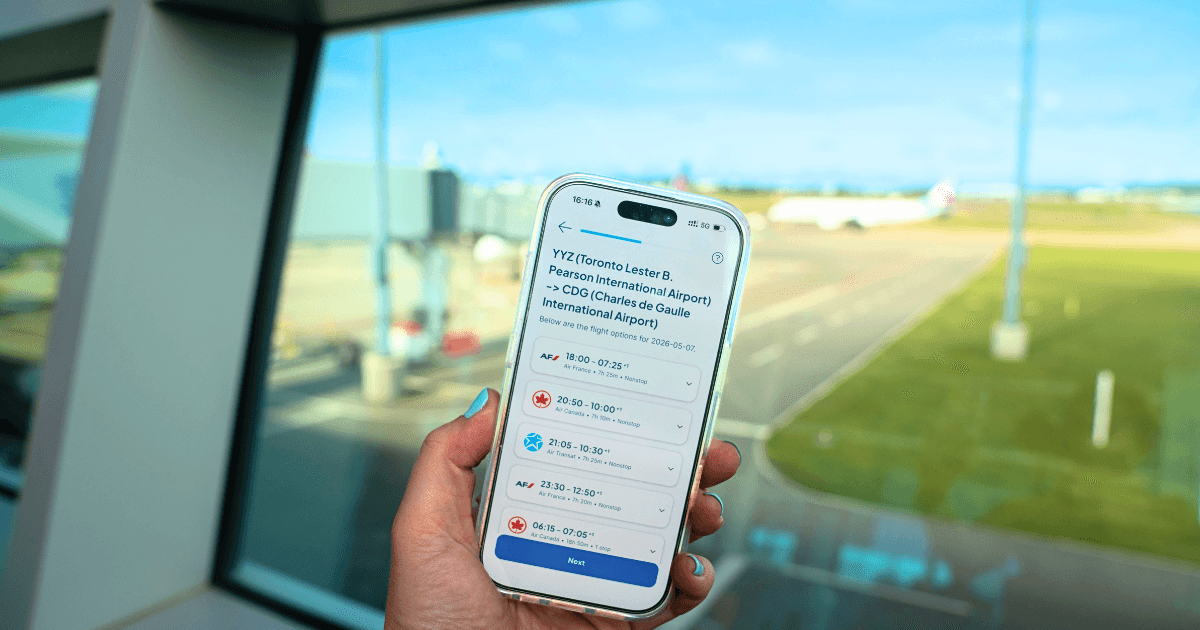
Selecting a flight for your trip in the PadsPass app
This is where AI-driven verification changes the equation. PadsPass uses AI to verify veterinary records against real-time international travel requirements — cross-referencing entry rules, treatment timelines, and document validity in a single digital dashboard. Instead of managing a folder of loose papers that border agents scrutinize under fluorescent lighting, owners get a centralized compliance view that flags problems before departure day.
One practical approach is to treat your compliance check the same way you’d treat booking flights: route-specific, confirmed in advance, and never left to the last minute.
Before your next EU crossing, run a route-specific compliance check at PadsPass — because a few minutes of verification today is worth significantly more than a rejected entry tomorrow.
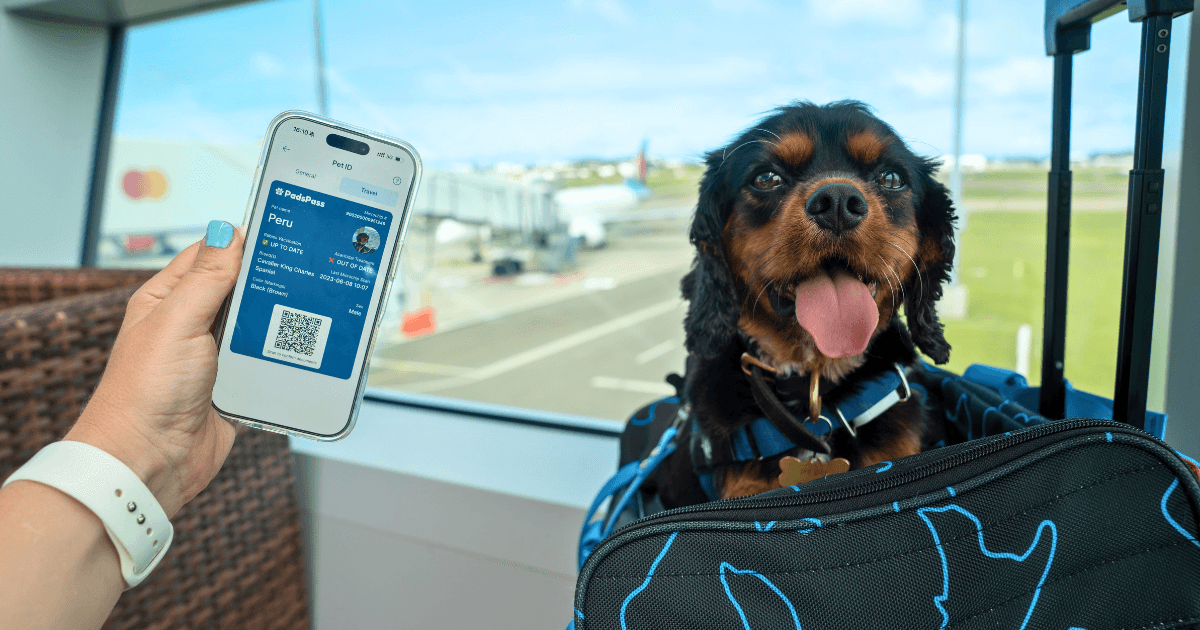
A Cavalier King Charles Spaniel in his travel bag while his pet parent checks his travel ID on a phone
What Real Border Enforcement Looks Like: A First-Hand Account
Knowing the rules is one thing. Experiencing what border agents actually check — and what they skip — is another. Here is a first-hand account of traveling with pets into the EU (Paris) and then continuing to the UK via Eurotunnel after the new EU pet passport rules took effect on April 22.
The documents carried were: an EU Pet Passport (issued in Portugal, with a Bermuda address listed), an Animal Health Certificate (AHC), and a Great Britain health certificate (GBHC) that included deworming completed within the required 5-day window — necessary for the UK destination. This is the kind of documentation stack that a well-prepared international pet traveler needs when they are not habitually resident in the EU and cannot simply rely on a single document.
At Paris customs, the EU Pet Passport was presented first. The customs officer asked where the handler lived — and when the answer was Bermuda (outside the EU), they immediately requested the additional paperwork: the AHC. The AHC was stamped. Notably, the dog’s microchip was not scanned at this checkpoint. This is a critical detail, because the entire EU compliance framework is built around microchip verification — yet in practice, the paper stamp took priority over confirming the animal’s identity.
At Eurotunnel (entering the UK), the experience was reversed. Staff scanned the dog’s microchip but only reviewed the EU Pet Passport — they did not ask for the Great Britain health certificate at all. The GBHC, which had been obtained specifically for UK entry and included the required deworming documentation, was never requested.
Key Outcome: What This Trip Confirmed

A Cavalier King Charles Spaniel at Charles de Gaulle Airport in Paris
This trip confirmed in real-world travel that after April 22, an EU Pet Passport alone was NOT sufficient to enter the EU when the pet’s handler is not habitually resident in Europe. Customs required an Animal Health Certificate to be stamped. It also confirmed that Eurotunnel continues to accept an EU Pet Passport for entry into the UK — including microchip scan and deworming information — without requesting the Great Britain health certificate. This highlights a significant inconsistency between EU border enforcement and UK entry checks.
“It felt like a paperwork exercise—stamps were the priority, not actually verifying the animal matched the documents.”
The Real Lesson: Compliance Is About Navigating Inconsistency
Pet travel compliance is not just about knowing the rules — it is about navigating inconsistent enforcement across governments and transport providers. Even when regulations change (as they did on April 22), enforcement at checkpoints may focus entirely on paperwork and stamps rather than verifying the pet’s actual identity via microchip. Meanwhile, another checkpoint in the same journey might scan the microchip but not request the very certificate that was required elsewhere.
The safest approach when traveling internationally with pets is to carry the most up-to-date documentation AND backup paperwork (such as both an AHC and any relevant country-specific certificates) because different checkpoints — whether EU customs, Eurotunnel, or another transport provider — may each request something different. The pet owner who shows up with a complete documentation stack is the one who crosses without incident, even when enforcement is unpredictable
Key Takeaways: EU Pet Passport Rules in 2026
GB-issued EU Pet Passports are permanently invalid for EU travel — British pet owners need an Animal Health Certificate (AHC) for every trip.
Americans cannot get an EU pet passport in USA — the document requires an EU-based vet and a pet physically present in the EU. The required alternative is an Annex IV AHC.
The microchip must be implanted BEFORE the rabies vaccination — not the same day. Any reversed sequence voids the vaccination record for EU border purposes.
The AHC is valid for only 10 days from issue for EU entry. Missing this window means starting the entire documentation process over.
New EU rules for pet travel that took effect April 22, 2026 mean that non-resident handlers — even those with an EU Pet Passport for their pet — must present an AHC when entering the EU.
Border enforcement is inconsistent — one checkpoint may stamp paperwork without scanning a microchip, while another scans the microchip but skips a required certificate. Carry all documentation every time..
Generated by Frase