Why Logistical Precision is the Best Cure for Dog Travel Anxiety
Stop dog travel anxiety before it starts. Learn how logistical precision and preparation help calm dogs in cars and planes without relying solely on medication.
Handling a dog’s anxiety during car travel is already challenging enough — but the moment international borders, health certificates, and cargo holds enter the picture, that anxiety compounds fast. For most dogs, travel stress isn’t random. It’s a direct response to the chaos their owners create when preparation falls short. Missed paperwork, last-minute vet visits, and frantic airport scrambles all register as threat signals to a dog that reads your body language better than you do. The good news is that anxiety is largely preventable — and the cure isn’t sedation or expensive behavioral therapy. It’s precision. When every logistical detail is handled well in advance, your stress drops, your dog’s stress drops with it, and the journey becomes manageable for both of you. This guide walks through exactly how to make that happen: from spotting early anxiety signals before they escalate, to navigating the documentation requirements that derail even experienced pet travelers. Whether you’re planning a cross-country road trip or an international relocation, the same principle applies — a calm, organized owner is the single most powerful tool you have.
The Hidden Link Between Your Stress and Your Dog’s Car Anxiety
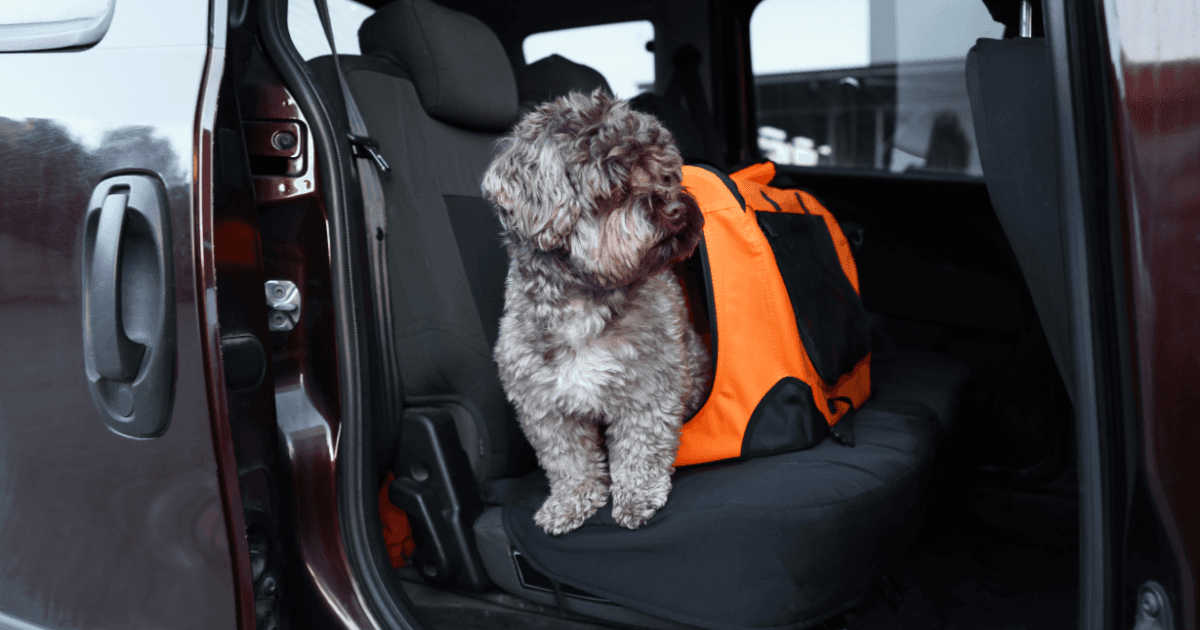
Dogs absorb owner emotions like a sponge — and during travel prep, that connection becomes a liability. Whether you’re managing dog anxiety traveling in a car or navigating international flight requirements, your cortisol level is contagious. Last-minute scrambles over missing paperwork spike your stress instantly, and your dog notices every bit of it.
According to VCA Animal Hospitals, thorough preparation well ahead of departure — including knowing the destination’s entry requirements and acclimating your dog to the carrier — is the most reliable way to prevent the last-minute panic that dogs readily detect in their owners.
International travel amplifies this dynamic significantly — unlike a local drive, it layers health certificates, complex entry requirements, and tight deadlines into the equation. A calm, organized owner is the single most powerful calming tool available. A study published in Scientific Reports (2019) found that dogs mirror their owners’ cortisol levels, meaning reducing your own logistical stress biologically lowers your dog’s anxiety. The sections ahead will show you exactly what to do — starting with learning to read your dog’s early warning signs.
Recognizing the 5 Signs of Car Travel Anxiety in Dogs — Before They Escalate
Catching stress signals early is the single most effective way to prevent full-blown panic during transit. A dog showing subtle cues at home will almost certainly escalate in an airport.
Watch for these five warning signs:
Excessive yawning or lip licking — calming signals dogs use under pressure
“Whale eye” — whites of the eyes visibly exposed, indicating unease
Panting and pacing in the car despite comfortable temperatures
Hypersalivation — often confused with motion sickness but rooted in psychological anxiety
Trembling or freezing — a shutdown response to overwhelming sensory input
Distinguishing motion sickness from psychological anxiety matters because they require different interventions — including whether dog car anxiety medication is appropriate. On international flights, intervention windows close fast — making early detection, and avoiding common travel missteps, non-negotiable. And stress doesn’t peak at departure — it peaks at the border.
Why Travel Anxiety Gets Worse When Your Pet’s Paperwork Goes Wrong
Logistical failures don’t just inconvenience owners — they directly intensify dog travel anxiety symptoms at the worst possible moment. USDA APHIS confirms that incomplete or inaccurate veterinary health certificates can result in animals being held at ports, refused entry, or returned — adding unpredictable delays at exactly the moment when your dog’s stress is already highest.
A paperwork mistake can turn a routine flight into hours of unpredictable confinement — the exact sensory chaos that sends stress responses spiraling.
Extended delays mean prolonged exposure to cargo noise, unfamiliar smells, and isolation.
Border checks introduce erratic human handling — a powerful escalation trigger.
Brachycephalic breeds (bulldogs, pugs) face genuine respiratory risk when high-stakes logistics break down.
Automated verification removes that unpredictability. When health documentation is pre-validated before departure, border interactions become brief and predictable — precisely the kind of structured routine that keeps anxiety manageable. Addressing logistics is essential, but it’s only half the solution. The other half is training your dog to associate travel with safety — which is where desensitization comes in.
Desensitization: How to Fix Travel Anxiety in Dogs, Long-Term
Behavioral conditioning — not sedation — is the most durable solution for dog anxiety on plane and car journeys alike. According to the Journal of Veterinary Behavior, routine and predictability are the primary stabilizers for an anxious dog’s mental state during transit. Three principles make that routine stick:
Desensitize gradually. Introduce the crate or carrier over days, not hours. Pair each exposure with high-value treats so the space signals reward, not confinement.
Reward short “fun” trips. Dogs that only ride in the car to the vet associate travel with dread. Regular low-stakes drives — ending at a park — reframe the pattern entirely.
Build a predictable logistical routine. The 3-3-3 rule suggests three days to decompress, three weeks to settle, three months to feel at home — apply the same patient pacing to any new travel environment.
Even well-trained dogs may need additional support for longer journeys — which is where medication enters the conversation.
The Role of Medication: When Training Isn’t Enough
Medication works best as a supplement to behavioral prep — not a substitute — but some dogs genuinely need pharmacological support to calm them in car or cabin environments.
A vet trial run at home is non-negotiable. As VCA Hospitals notes, testing any medication before departure prevents dangerous paradoxical reactions mid-journey. Natural options — pheromone diffusers, compression wraps, and calming supplements — offer lower-risk starting points.
Medication Type | Best For | Considerations |
|---|---|---|
Daily anxiolytics | Chronic, generalized anxiety | Requires weeks to build effect |
Fast-acting ‘event’ meds | Single trips | Must be trialed at home first |
Natural alternatives | Mild situational stress | Fewer side effects; variable efficacy |
Consult your veterinarian before administering any medication for travel anxiety. Medications like gabapentin or trazodone are most effective when paired with logistical precision such as desensitization and preparation. For international flights, vet-issued documentation requirements can influence which medications are even permitted — another reason a destination-specific vet consultation matters.
Managing Dog Anxiety Traveling by Car, Air, and Beyond
Air travel compounds anxiety in ways car trips simply don’t — separation, sensory overload, and paperwork pressure hit simultaneously.
The Fear Free Initiative — which trains veterinary professionals to minimize fear, anxiety, and stress in pets — emphasizes that air travel exposes dogs to a uniquely difficult combination of stressors: sudden separation from their owner, unfamiliar sounds and smells, and a complete loss of predictable routine. Reducing those variables wherever possible is the foundation of a lower-stress flight.
Unlike choosing medication for dog anxiety in car journeys — where you control the environment — flying introduces variables beyond your reach. Key strategies include:
Pre-flight exercise: A long walk burns nervous energy before check-in
Hydration balance: Offer water up to two hours before departure, then limit intake
Minimize dwell time: Streamlined airport paperwork — health certificates, vaccination records — ready on a digital dashboard cuts time in high-traffic processing areas dramatically
Once you’ve managed the journey itself, the challenges don’t end at baggage claim.
Extreme Anxiety on Vacation: What to Do at Your Destination
Knowing how to fix travel anxiety in dogs doesn’t stop at the airport — arrival triggers a whole new wave of stress that smart preparation can prevent.
Create a safe zone immediately. Unpack your dog’s bed, blanket, and a worn t-shirt to anchor familiar scents in the new space.
Hold your routine firm. Same feeding times, same walk rhythm — predictability is calming when everything else feels foreign.
Manage reactivity outdoors. Start with quiet, low-traffic routes before exposing your dog to busier environments.
Having your dog’s medical records instantly accessible removes a major stress point if symptoms escalate unexpectedly. A digital pet health record means any local vet can review your dog’s history within minutes — no scrambling, no delays.
The Bottom Line: Your Checklist for a Calm Journey
Logistical precision is the most reliable anxiety reliever for traveling dogs — and it starts long before you reach any terminal.
Spot symptoms early: Panting, yawning, and pacing signal stress before it escalates
Test crates and medications weeks ahead — never on departure day
Prioritize routine: Consistent feeding and walk schedules reduce uncertainty throughout transit
Automate compliance paperwork: According to IPATA, incomplete documentation is a primary trigger for delays that spike both your stress and your dog’s — staying ahead of requirements removes that risk entirely
A calm owner produces a calmer dog. Managing the logistics precisely means your full attention stays on your pet — exactly where the next section shows how the right tools make that possible.
Checklist for Calm Travel
To ensure a smooth journey for both you and your pet, follow this checklist based on recommendations from AVMA and USDA APHIS:
Carrier acclimation: Gradually introduce your dog to the travel carrier weeks before the trip using high-value treats.
Health requirement verification: Double-check all veterinary health certificates and international travel documents are compliant.
Routine maintenance: Stick to your dog’s regular feeding and exercise schedule as closely as possible.
Medication trial: Conduct a test run of any travel medications under the guidance of your veterinarian.
How PadsPass Simplifies Dog Anxiety Traveling by Car and Beyond
Owner calm is the fastest path to dog calm — and that starts with eliminating paperwork panic before it begins. PadsPass uses AI to verify veterinary records against real-time international travel requirements, so border surprises become a thing of the past. A clear, route-specific dashboard lets you focus on your dog’s comfort instead of fine print. Start your compliance checklist today and travel with confidence, not anxiety.

Key Takeaways
Dog anxiety while traveling by car or plane is rarely random — it’s a predictable response to owner stress, logistical chaos, and environmental unpredictability. The single most effective intervention isn’t medication or specialized training: it’s eliminating the paperwork panic and uncertainty that spike your cortisol before your dog ever enters the carrier.
Desensitization, gradual carrier exposure, and a consistent pre-travel routine are your most durable behavioral tools — but they only work when the logistical foundation is solid. A missed health certificate or last-minute vet scramble can undo weeks of conditioning in minutes.
The most important decision you can make for a calm journey is to handle compliance early, verify documentation before departure, and arrive at the terminal already calm — because your dog will mirror your state, not your preparation.
Key Terms: Dog Travel Anxiety Glossary
Desensitization: A behavioral conditioning process in which a dog is gradually and repeatedly exposed to a fear trigger (such as a carrier, car, or airport environment) at low intensity, paired with positive reinforcement, until the trigger no longer produces a fear or stress response. For dogs with car or plane travel anxiety, this is the gold-standard long-term treatment.
Anxiolytics: A class of medications prescribed to reduce anxiety. In veterinary practice, anxiolytics used for dog travel anxiety include daily medications (such as SSRIs or tricyclics that require weeks to build effect) and fast-acting situational drugs. All anxiolytics for pets must be trialed at home before travel to rule out paradoxical reactions.
Cortisol mirroring: The documented phenomenon in which a dog’s stress hormone levels correlate with their owner’s cortisol levels. Studies show this bond is strongest in long-term owner-dog pairs, making the owner’s emotional state a direct physiological influence on a dog's anxiety in the car or cabin.