Traveling With Your Pet: Why the Time Together Matters
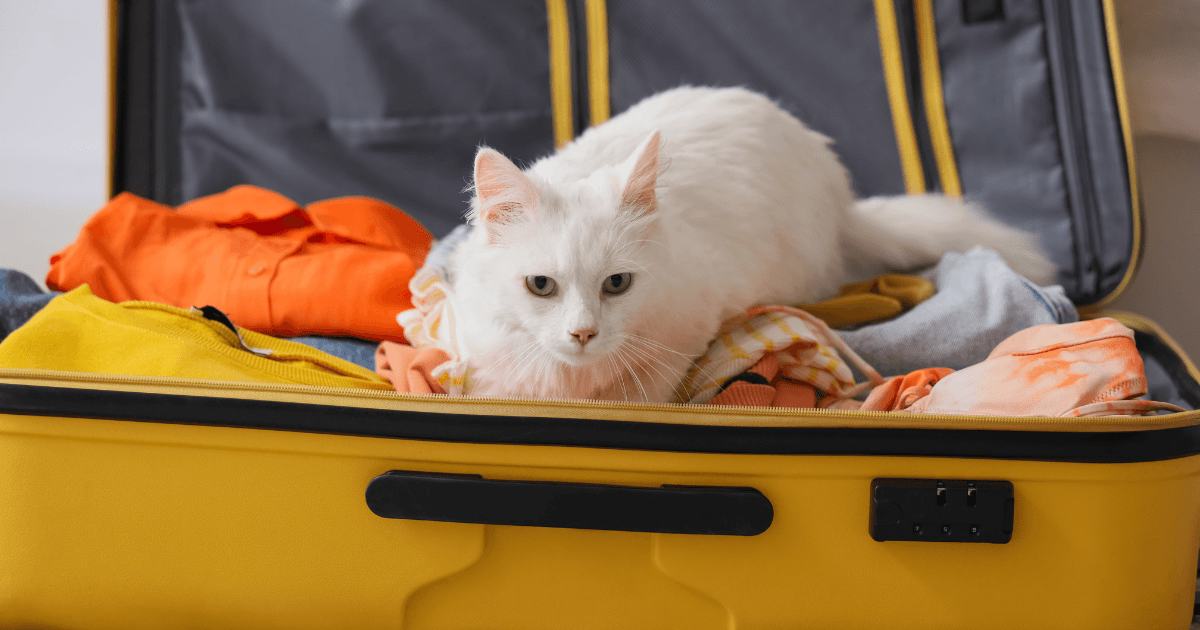
You might get twenty years with a cat. Almost nobody does.
The Royal Veterinary College built the first life tables for UK pets out of real clinical records, covering nearly 40,000 animals under veterinary care. The averages are shorter than most of us assume: 11.7 years for cats and 11.2 years for dogs, measured from birth.
Eleven or twelve years still sounds like a long time. Then you take it apart, and the next trip you plan without them starts to look different.
The honest arithmetic
Call it twelve years. That is 4,380 days.
Now subtract the hours neither of you is really there for. They sleep for a large part of the day. You work. You commute, you run errands, you go out. On an ordinary day, the time you are both awake, in the same room, actually together might come to four hours.
Four hours a day across twelve years is 17,520 hours. Put another way, almost exactly two years of round-the-clock time.
That is the whole of it. Not twelve years. Two.
Run your own version of that sum with your own numbers. Whatever you get, it will be smaller than the figure on the pet insurance form.
What a holiday without them actually costs
Two weeks away, once a year, for twelve years is 672 waking hours. Against a total of 17,520, that is four full weeks of your round-the-clock time together, gone.
Not paused. Gone.
That is not a reason to feel guilty about a trip you already took. Most people who leave a pet at home do it for a sensible reason, and the most common sensible reason is that bringing them looked like more trouble than the holiday was worth.
They are usually right about the trouble. That is the part worth fixing.
The trouble is real, and it arrives early
In the cases we see, a domestic road trip takes a week or two of planning: which hotels accept dogs, where the stops are, what harness works in a car.
A domestic flight tends to take a month or two: carrier dimensions, in-cabin weight limits, which terminals have relief areas.
An international trip is different, because some of the waiting is set by law and no amount of organization will shorten it. Japan requires a rabies antibody test followed by a waiting period of 180 days or more before your pet may arrive, counted from the day the blood sample is taken, plus notification to its Animal Quarantine Service at least 40 days before arrival. Australia sets the same 180 days for cats and dogs coming from a Group 3 country, counted from the day the laboratory received the sample. The European Union requires that at least 21 days have passed since a primary rabies vaccination, with a health certificate issued no more than 10 days before arrival. Great Britain requires dogs to be treated for tapeworm in a window between 24 and 120 hours before entry, which is narrow enough to miss.
And the rules move. The European Union amended its pet movement rules again in January 2026. Japan has struck a laboratory off its list of approved rabies testing facilities, which means a blood test sent to the wrong place stops counting.
Nobody emails a pet parent when an annex changes. You find out at the counter, or you find out because you looked.
So three to six months is not pessimism. For some destinations it is the arithmetic.
None of that is a holiday. It is a second job, and it is unpaid, and the penalty for missing one step is finding out at the check-in desk.
I have been on the wrong end of that desk. Flying home to Bermuda from New York, the check-in agent told me I needed a CDC form before my dog could board. That was not the requirement, and she was confident it was.
What made that a two-minute conversation instead of a missed flight is that I already knew what the trip actually called for. It was in my PadsPass® Digital Pet Passport, checked before I left for the airport, so I was not standing there trying to work out whether she might be right. I knew she was not.
That is what the preparation is really buying. Not a smoother trip. The calm of being certain when the person in front of you is confidently wrong.
Where PadsPass fits in pet travel
We do not book your hotel and we do not argue with an airline about carrier dimensions.
What we do is take the paperwork off your kitchen table. Your pet’s vaccination records and microchip details live in one place, alongside the entry requirements for where you are going, so you are not calling your veterinarian the night before a flight or reading the same government page a third time because you did not trust it the first two.
The pet travel requirements still belong to the country and the airline. They will still ask. The difference is that you will have the answer, and you will know it is the right one.
The point of a holiday
You get about two years of waking time with your pet, and you do not get to know which part of it you are in.
So bring them. That is the whole point of a holiday.
Get your Digital Pet Passport and find out what pet travel requirements are needed for your next trip, before it takes another month of your life to work out.