The Dog Brain Under Stress: Neuroscience of Dog Travel Anxiety
Neuroscience helps explain why your dog pants, paces, freezes, or shuts down during travel. Explore the stress biology behind dog travel anxiety.

I’ve worked with a lot of anxious dogs in New York City. And one thing I’ve noticed is how often the car is the thing that breaks them. Not a thunderstorm, not a stranger on the street — the car. A client will tell me their dog is “fine everywhere else” and then describe a dog who starts shaking the moment the keys come off the hook.
That’s not a quirk. That’s neuroscience.
What looks like “nervousness” or a “bad personality” is actually a precise, well-documented biological response. And once you understand what’s happening inside the brain, the whole picture changes. How you read your dog, how you respond to them, and what you can actually do to help.
This article walks through the brain structures and chemicals driving dog travel anxiety, why cars are particularly hard on the canine nervous system, and what the science says about fixing it.
What you’ll learn: The architecture of the canine stress brain | How cortisol and adrenaline shape behavior | Why travel is uniquely stressful for dogs | The difference between acute and chronic stress | Neuroscience-backed strategies to help your dog cope
Understanding the Canine Brain: A Quick Neuroanatomy Primer
Before we get into what goes wrong during travel, it helps to know the players. Dogs and humans share many of the same core stress-related brain structures — including the amygdala, hippocampus, prefrontal cortex, and HPA axis — even though the systems are not identical across species. That is what makes the science useful, as long as we keep the comparisons honest.
The Three Key Regions Involved in Stress Processing
The amygdala — the threat detector
Think of the amygdala as part of the brain’s alarm system. It’s small — buried deep in the temporal lobe — but it moves fast. When your dog picks up on something potentially dangerous — an unfamiliar sound, a sudden movement, the rumble of an engine — threat-processing circuits can activate very rapidly, often before slower appraisal systems have fully evaluated the situation. That’s by design. Hesitation has a cost in the wild.
The problem for our dogs is that this system can’t easily sort “genuine threat” from “Tuesday afternoon car ride.” It fires anyway. Every time.
Anxious dogs show measurably different connectivity between the amygdala and other brain regions involved in fear processing — including the hippocampus, thalamus, and mesencephalon. In other words, anxiety in dogs appears to be associated with altered wiring in threat- and arousal-related networks, not just “bad behavior” or stubbornness (Xu et al., 2023).
The hippocampus — the memory archivist
The hippocampus works alongside the amygdala, and its job is memory — specifically, forming it, storing it, and pulling it back up when something familiar appears. So when a dog has a bad car ride, the hippocampus files that away. The next time they see a car, that memory surfaces before they’ve even touched the door handle.
One bad experience can be enough. A frightening vet trip. A thunderstorm that hit mid-ride. High-stress experiences can become especially memorable because glucocorticoid and noradrenergic systems interact with the amygdala and hippocampus during memory consolidation. The brain takes emotionally intense information seriously (McIntyre et al., 2012; Wirth, 2015).
The prefrontal cortex — the brake pedal
If the amygdala is the gas, the prefrontal cortex (PFC) is the brakes. Metaphorically, the PFC acts like a regulatory brake system: it supports impulse control, flexible decision-making, and emotional regulation. In a dog who’s doing well, these higher-order control systems can help dampen the alarm response once the real picture becomes clearer.
But here’s the problem: chronic stress can weaken those brakes. In broader mammalian neuroscience, prolonged stress is associated with changes in prefrontal, hippocampal, and amygdala circuits that support regulation, memory, and threat detection. That means a dog with a long history of anxiety may have a nervous system that is quicker to alarm and slower to settle — a self-reinforcing cycle (Arnsten, 2009; McEwen, 2008).
The HPA Axis: The Body’s Stress Broadcasting System
These brain regions don’t work in isolation. They feed into something called the Hypothalamic-Pituitary-Adrenal (HPA) axis — the hormonal chain of command that turns a perceived threat into a full-body response.
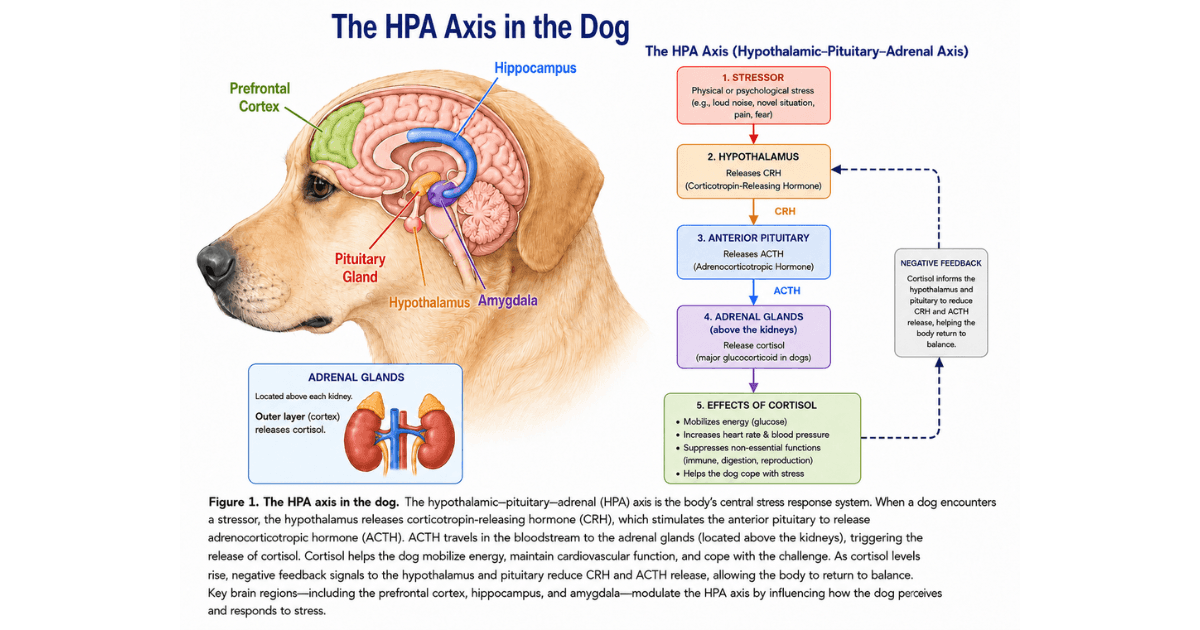
The amygdala signals danger → the hypothalamus activates → the pituitary gland fires → the adrenal glands release cortisol and adrenaline. Heart rate goes up, pupils dilate, muscles tense, digestion shuts down. The body is ready to fight, flee, or freeze. It’s elegant, really — just not very useful on a routine trip to the dog park.
The Neuroscience of Canine Stress: Acute vs. Chronic
Not all stress is the same, and the distinction matters more than most people realize. I’d say this is one of the most underappreciated pieces when owners are trying to figure out what’s going on with their dog.
Acute Stress: The Short-Term Surge
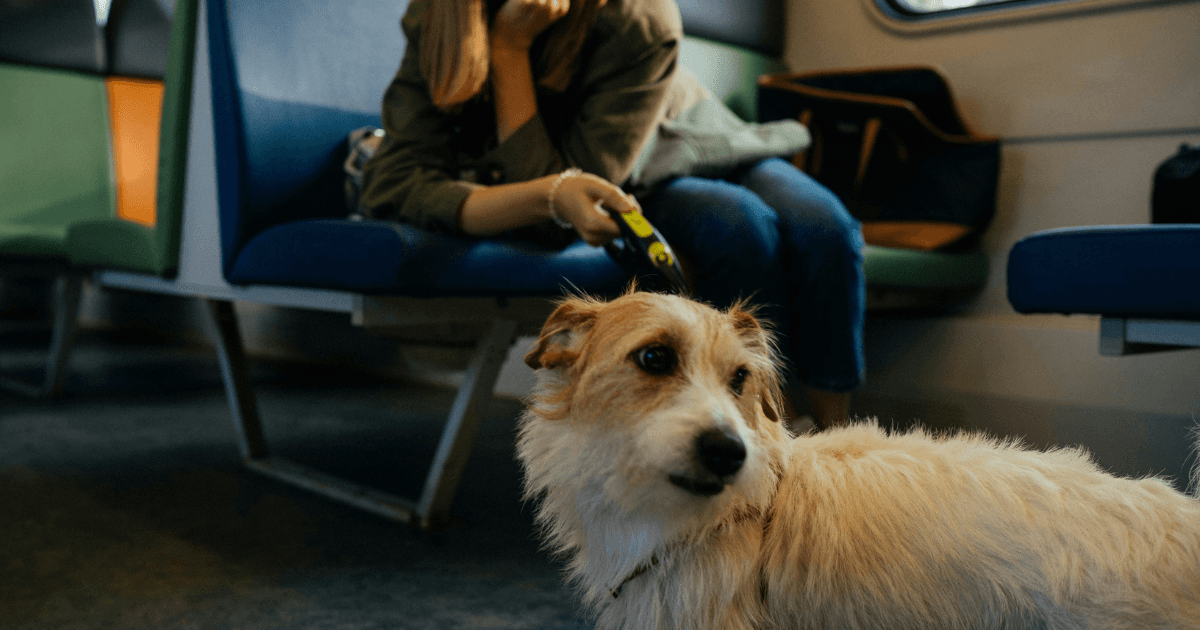
Acute stress is the fast, time-limited kind — triggered by something specific, like a car ride or a vet visit. Cortisol rises, energy gets mobilized, attention sharpens. And then, once it’s over, it fades. In a healthy dog, the stress response should gradually return toward baseline after the trigger is gone, although the timing varies by dog, context, and intensity of the event.
This kind of stress isn’t inherently harmful. It’s adaptive. It’s the same system that kicks in during a good hard run or a play session. The issue is when it stops being short-term.
Chronic Stress: When the Alarm Never Turns Off
Chronic stress is what happens when a dog gets hit with stressor after stressor without enough time to recover. Maybe they travel often, maybe the home environment is chaotic, maybe they’ve been anxious for years. The HPA axis stays partially activated, cortisol stays elevated, and the whole system starts to fray.
The downstream effects are significant. Chronic stress can influence immune function, digestion, sleep, learning, and emotional regulation. It can also make reactivity, aggression, and compulsive behaviors more likely to escalate, not because the dog is choosing chaos, but because the whole system is operating closer to threshold (Hekman et al., 2014; Mârza et al., 2024).
A note on allostatic load: This is the term neuroscientists use for the cumulative wear that chronic stress puts on the body. A dog with high allostatic load has a stress bucket that’s nearly always full — so even minor triggers tip them over. When owners tell me their dog “overreacts to everything,” this is usually what’s actually going on.
Why Travel Is Uniquely Stressful for Dogs: The Neuroscience Explained
Of everything I see dogs struggle with, car travel is one of the most neurologically loaded. And once you understand why, it makes complete sense.
Multisensory Overload
A car is a lot. The engine vibration comes through the floor, the seat, the whole body. Road noise is constant and unpredictable. The visual world outside shifts faster than anything a dog’s brain evolved to process — movement without locomotion, light changing in ways that don’t match any natural experience.
Dogs can detect higher-frequency sounds than humans, with studies placing the upper end of canine hearing well above the human range. Their sense of smell is in a league of its own. In a moving car, the olfactory landscape changes by the second. For a brain that’s wired to extract meaning from every sensory signal, that’s an enormous amount of unresolvable input coming in all at once (Guérineau et al., 2024).
The Loss of Predictability and Control
One of the most reliably stressful things for any mammal is feeling like you have no control over what’s happening. Across stress research, predictability and control matter: stressors that feel unpredictable or inescapable tend to produce stronger and more persistent stress responses than stressors the animal can anticipate or influence (Wood et al., 2015).
In a moving car, a dog can’t stop the movement, can’t predict the destination, and can’t leave. That absence of agency is its own stressor — independent of anything physically uncomfortable.
The Cortisol Evidence
A study published in Animals measured cortisol in dogs before, during, and after short-distance road transport. In 18 transport-naive beagles, plasma cortisol, salivary cortisol, heart rate, heart-rate variability, neutrophil-to-lymphocyte ratio, and behavior all showed stress-related changes. Critically, these numbers did not simply normalize across repeated trips. Habituation to car travel is not automatic. Not even close (Herbel et al., 2020).
Motion Sickness and the Vestibular System
Separate from the psychological piece, a lot of dogs experience genuine motion sickness. It’s a conflict between two systems: the visual system sees movement. The vestibular system — the balance and orientation apparatus in the inner ear — is getting different signals. The brain interprets that mismatch as possible poisoning and triggers nausea.
Motion sickness is especially common in puppies and young dogs, likely because the inner-ear systems involved in balance are still maturing. Many dogs improve with age, but if early car rides repeatedly predict nausea, the car can become emotionally loaded even after the vestibular system matures (VCA Animal Hospitals, n.d.-b).
Reading the Signs: What Stress Behaviors Look Like (and What They Mean Neurologically)
This is the part I spend a lot of time on with clients. Because once you know what’s driving these behaviors, you stop reading them as “bad behavior” and start reading them as information. Your dog isn’t being dramatic. Their nervous system is talking.
Panting (Without Heat or Exercise)
Stress panting is the autonomic nervous system doing its thing. Adrenaline pushes up the heart rate and breathing; panting helps dump the extra heat that comes with that metabolic spike. It’s also a mild self-soothing behavior — the parasympathetic system trying to push back against the sympathetic surge.
Lip Licking, Yawning, and Tongue Flicks
These are called displacement behaviors — small, self-directed actions that show up when a dog is caught between conflicting impulses or feeling low-grade distress. They’re doing double duty: communicating something to others and trying to regulate themselves at the same time. In car travel studies, lip licking shows up as one of the most common stress signals observed.
Freezing and Shutdown
When fight and flight aren’t options, the nervous system may go to freeze. A dog that goes totally still, seems unresponsive, or “checks out” during travel is not necessarily calm. They may be freezing or shutting down rather than relaxing. In severe cases, immobility can reflect an involuntary defensive response, not calm acceptance.
This is one of the most misread signals I see. Owners assume stillness means acceptance. It doesn’t always. It may mean the dog’s nervous system has concluded that movement, escape, or active coping is not available.
Pacing and Restlessness
The body is primed to move — fight or flee — but it’s stuck in a small space. That unresolved arousal has to go somewhere. Pacing and restlessness are what sympathetic nervous system activation looks like when there’s nowhere to direct it.
Vomiting, Excessive Salivation, and Urination
During a stress response, blood flow gets redirected away from the digestive and urinary systems toward the muscles. The result: nausea, drooling, and sometimes involuntary urination. Not behavior problems. Physiology.
Hypervigilance and Scanning
The dog who can’t settle, whose eyes track every movement, whose ears rotate constantly — that’s an amygdala running at elevated sensitivity. In that state, everything is potentially significant. Ordinary stimuli get flagged as potential threats.
Key takeaway: Punishing any of these behaviors adds a stressor on top of the existing stress. It doesn’t touch the underlying neurological state. The only thing that actually helps is bringing that arousal level down.
The Stress-Behavior Feedback Loop: Why It Gets Worse Over Time
Here’s something I wish more people understood: stress doesn’t just affect behavior in the moment. It changes the brain. And those changes make future stress more likely. This is neuroplasticity working against the dog.
Fear Conditioning and the Amygdala
Every stressful car experience can strengthen the learned association between “car” and “threat.” The more often the car predicts fear, the more efficiently the brain retrieves that fear response. Eventually, the sight of car keys alone may be enough to set off a stress response. The dog hasn’t even left the house.
Sensitization vs. Habituation
Repeated exposure to a stressor can go two ways. If the dog stays below their reactivity threshold — if exposures are brief, positive, and manageable — the alarm response can gradually soften. That’s habituation, and it’s part of the neurological basis of desensitization.
But push the dog past their threshold — force them into situations before they’re ready — and you get sensitization instead. The alarm becomes more hair-trigger with every exposure. “Just take them on more rides” is some of the worst advice I hear. Without structure, it often makes things considerably worse.
At PJH Dog Training, I work with dogs who’ve built up years of fear history around travel and other triggers — using systematic desensitization and counter-conditioning in real New York City environments.
From Neuroscience to Practice: Evidence-Based Strategies for Travel Stress
The science isn’t just interesting — it actually tells you what to do. Each of these approaches has a clear neurological rationale.
Systematic Desensitization: Rewiring the Amygdala
The goal is to expose the dog to travel-related stimuli at such a low level that no major stress response fires at all. Start with the dog near a parked car with something great happening — high-value food, play, calm energy. Stay there until it’s genuinely easy. Then take a tiny step forward. And another. This is standard desensitization and counter-conditioning: gradual exposure at a tolerable intensity, paired with something the dog genuinely likes (Hammerle et al., 2015; Stellato et al., 2019; VCA Animal Hospitals, n.d.-a).
This takes weeks. Sometimes months. But it’s not just changing behavior — it’s changing the brain itself.
Counter-Conditioning: Building New Neural Pathways
Counter-conditioning pairs the trigger with something the dog genuinely loves — usually food. The aim is to flip the emotional response: “car” goes from predicting threat to predicting good things. Over enough repetitions, that shift happens at the level of emotional prediction, not just visible behavior (Hammerle et al., 2015).
Timing is everything. The food needs to appear before the dog reacts — you’re targeting the unconscious response, not rewarding the behavior after the fact.
Physical Safety and the Vestibular System
A stable, enclosed resting surface reduces vestibular conflict. A crate or well-fitted travel harness keeps the dog in a consistent orientation, which helps the vestibular system stay calibrated. For dogs with significant motion sickness, a vet-prescribed anti-nausea medication before travel can break the association between car rides and feeling sick — which is itself a major piece of the fear.
Exercise Before Travel
Appropriate exercise before travel can help some dogs start the trip with a lower arousal baseline, especially if the activity ends with a calm cooldown. For other dogs, intense exercise may increase arousal, so the goal is regulated movement, not exhaustion. A decompression walk, sniffing, or relaxed play 30–60 minutes before travel may give the dog more room before they hit threshold.
Calming Tools with Neurological Rationale
Calming supplements reviewed on PadsPass vary considerably in the evidence behind them — worth evaluating against peer-reviewed standards before committing.
When to Involve a Veterinary Behaviorist
For moderate to severe travel anxiety, behavior work alone sometimes isn’t enough to get started. Veterinary behaviorists and veterinarians can prescribe medications with true anxiolytic effects — including SSRIs for chronic anxiety, trazodone or gabapentin in some situational contexts, and benzodiazepines when appropriate — that work on systems involved in anxiety and arousal. Medication isn’t a replacement for behavior modification, but for severely affected dogs it can create the neurological conditions where learning becomes possible (Overall, 2013).
The Long-Term Effects of Chronic Travel Stress on Canine Health
Travel anxiety tends to get treated as an inconvenience. The neuroscience suggests we should be taking it more seriously than that.
Immune and Whole-Body Effects
Chronic stress does not just affect behavior. Over time, sustained stress physiology can influence immune function, digestion, inflammation, sleep, and metabolic regulation. This does not mean that anxiety directly “causes” every stomach upset, skin flare, or illness a dog experiences, but it does mean that a body repeatedly pushed into stress mode has fewer resources available for normal recovery and regulation. In dogs, the evidence is still developing, especially when it comes to linking everyday anxiety to specific medical diagnoses. Still, canine stress research and broader mammalian stress physiology point in the same general direction: repeated unmanaged distress can place strain on multiple body systems. The welfare point is clear — travel anxiety is not just an emotional inconvenience. When it happens often and recovery is poor, it can become a whole-body problem (Hekman et al., 2014; Mârza et al., 2024).
Cognitive Impact
A chronically stressed dog is harder to train. Not because they’re stubborn — but because stress can disrupt the brain systems that support attention, memory, and flexible regulation. I see this all the time: a dog who can’t retain what they learned last session, not because the training was wrong, but because they’re too stressed to consolidate it. A stressed brain cannot learn well (Vogel & Schwabe, 2016; Wirth, 2015).
Cardiovascular Stress
The Herbel et al. (2020) study in Animals also documented elevated heart rate and changes in heart-rate variability in dogs during transport — physiological markers that matter because repeated sympathetic activation can place strain on the cardiovascular system over time. One stressful car ride is not a cardiac event. But repeated, intense, poorly recovered stress is not nothing.
Lifespan and Quality of Life
Chronic stress is associated with poorer long-term health across many species. For dogs, the most defensible welfare point is simpler: repeated unmanaged distress can reduce quality of life and may contribute to broader health vulnerability. Addressing travel anxiety is not just about more comfortable car rides. It is about protecting the dog’s overall welfare over time (Hekman et al., 2014; McEwen, 2008; Mârza et al., 2024).
Individual Differences: Why Some Dogs Are More Vulnerable
Not every dog develops travel anxiety, and it’s worth understanding why. Both to assess risk and to avoid blaming yourself or your dog for something that has deep roots.
Genetic Predisposition
Some breeds are genuinely more predisposed to anxiety-related stress responses — though genetics always interact with environment. It’s never fixed destiny, but it is a real starting point.
Early Socialization Windows
The canine socialization window runs roughly from 3 to 12 weeks. During this period the brain is unusually plastic — experience shapes it deeply. Dogs who weren’t exposed to cars, movement, and varied environments during this window often carry that gap into adulthood as heightened travel sensitivity. That’s a developmental reality, not a training failure.
Trauma History
A dog who had something frightening happen in or around a car carries that in their hippocampus and amygdala. Those traces are durable. They can be reshaped through careful behavior work — but they don’t just dissolve on their own.
Owner Anxiety
Dogs pick up on us more than most people realize. One study of 58 dog-owner dyads found that long-term hair cortisol concentrations were correlated between dogs and owners, though the sample was limited to Shetland sheepdogs, border collies, and female owners. If you’re tense at the wheel, your dog may feel some of that. Managing your own calm during travel is not magic — it is part of managing the emotional environment (Sundman et al., 2019).
Practical Checklist: A Neuroscience-Informed Travel Protocol
Before the Trip
Exercise 30–60 minutes before departure to support a lower arousal baseline, but keep the goal regulated movement rather than exhaustion.
Skip feeding within 2 hours of travel if nausea is a factor.
Make sure the car has been introduced positively beforehand — never debut it on a high-stakes trip.
If your vet has recommended a calming supplement or anxiolytic, time it appropriately before you leave.
Check your own energy. Your dog is reading you constantly.
During the Trip
Use a crate or stable travel position to reduce vestibular conflict.
Crack a window when it’s safe — novel smells tend to be engaging rather than overwhelming.
Drive smoothly. Predictability and control matter — minimize hard braking and sudden acceleration.
Offer high-value chews or food puzzles for dogs who can eat in the car (skip this for nausea-prone dogs).
Brief, calm contact is better than excessive reassurance, which can inadvertently amplify arousal.
After the Trip
Give them time and space to decompress before jumping into anything demanding.
Calm environment, familiar smells, fresh water.
Notice how long it takes them to return to baseline — that recovery window tells you a lot.
how travel affects dog behavior long-term on PadsPass.
The goal isn’t to suppress stress behaviors. It’s to reduce the neurological state driving them. Behaviors are symptoms. The nervous system is the patient.
Frequently Asked Questions
Can a dog outgrow travel anxiety on their own?
Sometimes — particularly in puppies, as the vestibular system matures and general confidence builds. But a dog who’s already developed conditioned fear responses through repeated stressful trips is unlikely to improve without deliberate intervention. In a lot of cases I see, it gets worse over time, not better, because sensitization keeps compounding.
Is sedating my dog for travel safe and effective?
Acepromazine — the old go-to sedative — may reduce movement and outward expression. It is not a true anxiolytic and is not generally recommended as the sole medication for fearful situations. It can also cause paradoxical excitement, anxiety, or disinhibition in some dogs. For dogs with significant travel anxiety, veterinarians often consider medications with clearer anti-anxiety effects, alongside behavior modification. Always talk to your vet before medicating for travel (Costa et al., 2023; European Society of Veterinary Clinical Ethology [ESVCE], 2022; Merck Veterinary Manual, n.d.).
How long does it take to desensitize a dog to car travel?
There’s no single answer. A dog with mild, recent discomfort might improve over a few weeks of consistent positive exposure. A dog with years of fear history and significant sensitization could take months of structured work — and will likely need professional support. The longer the history, the longer the relearning. That’s just how the brain works.
My dog is fine at home but falls apart in the car — why?
Context-specific anxiety is extremely common, and it makes complete neurological sense. Home is known, predictable, loaded with positive associations. The car is a different sensory environment with its own emotional history attached. Threat and memory systems can store emotional associations by context, so the same dog can be relaxed in one setting and highly reactive in another — without any contradiction (McIntyre et al., 2012; Wirth, 2015).
Does my dog’s stress in the car affect their behavior afterward?
Yes, and this is something I flag with clients all the time. The physiological effects of a stressful trip can outlast the trip itself, especially when the dog has shown large stress-marker increases during transport or takes a long time to recover afterward. That can mean more reactivity, more frustration, and slower settling after the ride. If your dog seems “off” after car rides, pay attention to the recovery window (Herbel et al., 2020).
Conclusion: Stress Is Neurological, and So Is Recovery
The panting, the pacing, the frozen stare. None of it is drama. It is stress circuitry activating, cortisol and adrenaline changing the body’s priorities, the vestibular system sending distress signals, and memory systems retrieving previous times this felt dangerous.
What the neuroscience gives us — beyond the biology — is a framework for compassion. When you understand that your dog’s nervous system is doing exactly what it was built to do, the frustration gives way to something more useful: clarity. About what’s actually happening, and what can actually help.
Recovery is neurological too. Every calm trip is new data for the brain. Every ride that ends without incident is a quiet message that this situation is survivable. The brain rewires slowly. But it rewires.
Your dog isn’t broken. Their brain is doing its job. And now, so can you.
Key Takeaways
Threat circuits activate fast: Threat-processing circuits, including the amygdala, can activate very rapidly — often before slower, more flexible appraisal systems have fully evaluated the situation.
Cortisol can rise sharply during car travel: In one study of 18 transport-naive beagles, road transport increased salivary and plasma cortisol, heart rate, and other stress markers; repeated short trips did not automatically normalize the response (Herbel et al., 2020).
Chronic stress can change stress-related brain circuits: Chronic stress can alter the function and structure of stress-related circuits in mammals, including regions involved in emotion regulation, memory, and threat detection. In dogs, emerging imaging work suggests anxiety is associated with altered connectivity in fear- and arousal-related networks (McEwen, 2008; Xu et al., 2023).
More car rides alone won’t fix it: Throwing a dog into repeated trips without structure can backfire badly. Sensitization is real, and it moves fast.
Desensitization and counter-conditioning work: These are not just training buzzwords. They are standard veterinary behavior tools, and the goal is to change the emotional prediction attached to the trigger — not simply suppress the behavior (Hammerle et al., 2015; Stellato et al., 2019).
Recovery is neurological too: Every calm trip is new data for the brain. Change is slow — but it’s real, and it compounds.
About the Author
Pepe J. Hernandez, Ph.D., CPDT-KA is the founder of PJH Dog Training on New York City’s Upper West Side. Before becoming a dog trainer, he spent years in behavioral neuroscience research — studying how the brain forms and retrieves memory, particularly around emotional learning, reinforcement, and stress. That background is the foundation of everything he does with dogs now.
Reactive Resilience Therapy™ program, or book a consultation directly.
References
Arnsten, A. F. T. (2009). Stress signalling pathways that impair prefrontal cortex structure and function. Nature Reviews Neuroscience, 10(6), 410–422. https://doi.org/10.1038/nrn2648
Beerda, B., Schilder, M. B. H., van Hooff, J. A. R. A. M., de Vries, H. W., & Mol, J. A. (1998). Behavioural, saliva cortisol and heart rate responses to different types of stimuli in dogs. Applied Animal Behaviour Science, 58(3–4), 365–381. https://doi.org/10.1016/S0168-1591(97)00145-7
Costa, R. S., et al. (2023). Gabapentin, melatonin, and acepromazine combination prior to hospital visits in anxious and fearful dogs. Journal of the American Veterinary Medical Association, 261(11).
European Society of Veterinary Clinical Ethology. (2022). ESVCE position statement on the use of medications to manage acute phobic states in dogs as an alternative to acepromazine. https://esvce.org/wp-content/uploads/2022/07/ESVCE-Position-Statement-Use-of-Acepromazone.pdf
Guérineau, C., et al. (2024). Determining hearing thresholds in dogs using the staircase method. Veterinary Sciences, 11(2), 67. https://doi.org/10.3390/vetsci11020067
Hammerle, M., Horst, C., Levine, E., Overall, K., Radosta, L., Rafter-Ritchie, M., & Yin, S. (2015). 2015 AAHA Canine and Feline Behavior Management Guidelines. Journal of the American Animal Hospital Association, 51(4), 205–221. https://doi.org/10.5326/JAAHA-MS-6527
Hekman, J. P., Karas, A. Z., & Sharp, C. R. (2014). Psychogenic stress in hospitalized dogs: Cross species comparisons, implications for health care, and the challenges of evaluation. Animals, 4(2), 331–347. https://doi.org/10.3390/ani4020331
Herbel, J., Aurich, J., Gautier, C., Melchert, M., & Aurich, C. (2020). Stress response of beagle dogs to repeated short-distance road transport. Animals, 10(11), 2114. https://doi.org/10.3390/ani10112114
Mârza, S. M., Munteanu, C., Papuc, I., Radu, L., Diana, P., & Purdoiu, R. C. (2024). Behavioral, physiological, and pathological approaches of cortisol in canines: A comprehensive review. Animals, 14(23), 3536. https://doi.org/10.3390/ani14233536
McEwen, B. S. (2008). Central effects of stress hormones in health and disease. European Journal of Pharmacology, 583(2–3), 174–185. https://doi.org/10.1016/j.ejphar.2007.11.071
McIntyre, C. K., McGaugh, J. L., & Williams, C. L. (2012). Interacting brain systems modulate memory consolidation. Neuroscience & Biobehavioral Reviews, 36(7), 1750–1762. https://doi.org/10.1016/j.neubiorev.2011.11.001
Merck Veterinary Manual. (n.d.). Tranquilizers, sedatives, and analgesics for treatment of animals. https://www.merckvetmanual.com/pharmacology/systemic-pharmacotherapeutics-of-the-nervous-system/tranquilizers-sedatives-and-analgesics-for-treatment-of-animals
Overall, K. L. (2013). Manual of Clinical Behavioral Medicine for Dogs and Cats. Elsevier Mosby.
Stellato, A. C., Jajou, S., Dewey, C. E., Widowski, T. M., & Niel, L. (2019). Effect of a standardized four-week desensitization and counter-conditioning training program on pre-existing veterinary fear in companion dogs. Animals, 9(10), 767. https://doi.org/10.3390/ani9100767
Sundman, A.-S., Van Poucke, E., Svensson Holm, A.-C., Faresjö, Å., Theodorsson, E., Jensen, P., & Roth, L. S. V. (2019). Long-term stress levels are synchronized in dogs and their owners. Scientific Reports, 9, 7391. https://doi.org/10.1038/s41598-019-43851-x
VCA Animal Hospitals. (n.d.-a). Introduction to desensitization and counterconditioning. https://vcahospitals.com/know-your-pet/introduction-to-desensitization-and-counterconditioning
VCA Animal Hospitals. (n.d.-b). Motion sickness in dogs. https://vcahospitals.com/know-your-pet/motion-sickness-in-dogs
Vogel, S., & Schwabe, L. (2016). Learning and memory under stress: Implications for the classroom. npj Science of Learning, 1, 16011. https://doi.org/10.1038/npjscilearn.2016.11
Wirth, M. M. (2015). Hormones, stress, and cognition: The effects of glucocorticoids and oxytocin on memory. Adaptive Human Behavior and Physiology, 1(2), 177–201. https://doi.org/10.1007/s40750-014-0010-4
Wood, K. H., Wheelock, M. D., Shumen, J. R., Bowen, K. H., Ver Hoef, L. W., & Knight, D. C. (2015). Controllability modulates the neural response to predictable but not unpredictable threat in humans. NeuroImage, 119, 371–381. https://doi.org/10.1016/j.neuroimage.2015.06.086
Xu, Y., Christiaen, E., De Witte, S., Chen, Q., Peremans, K., Saunders, J. H., Vanhove, C., & Baeken, C. (2023). Network analysis reveals abnormal functional brain circuitry in anxious dogs. PLOS ONE, 18(3), e0282087. https://doi.org/10.1371/journal.pone.0282087