Pet Travel to the UK Without Flying Your Dog in the Hold
If you’re flying into the United Kingdom with your dog or cat on a commercial flight, the rule is clear: assistance dogs travel in the cabin, everything else arrives as cargo in the hold.
For Shirley, that looked like the end of the conversation for her French bulldog, Majesty. Commercial airlines routinely refuse flat-faced breeds in the hold — the short muzzle that gives them their distinctive look can also leave them particularly vulnerable to heat and pressure stress. So the hold was closed, and the cabin was never open.
Shirley was planning a move to the UK for an undetermined stretch of time and had started to accept that Majesty might not be coming. What changed wasn’t the airline. It was her map — PadsPass put the Netherlands on it.
The route she hadn’t considered for pet travel
The UK’s in-cabin restriction applies to commercial flights arriving into the UK. It doesn’t follow you across Europe. Several continental carriers will take a small dog in the cabin, and from Rotterdam, P&O Ferries runs an overnight crossing to Hull with onboard kennels and six dog-friendly cabins per ship.
Shirley’s problem was boats. She didn’t like them. But taking the ferry meant that Majesty could fly into Schiphol beside her, and arrive in Britain by sea. No hold, no cargo terminal, no separation.
That settled the route. It also started a clock.
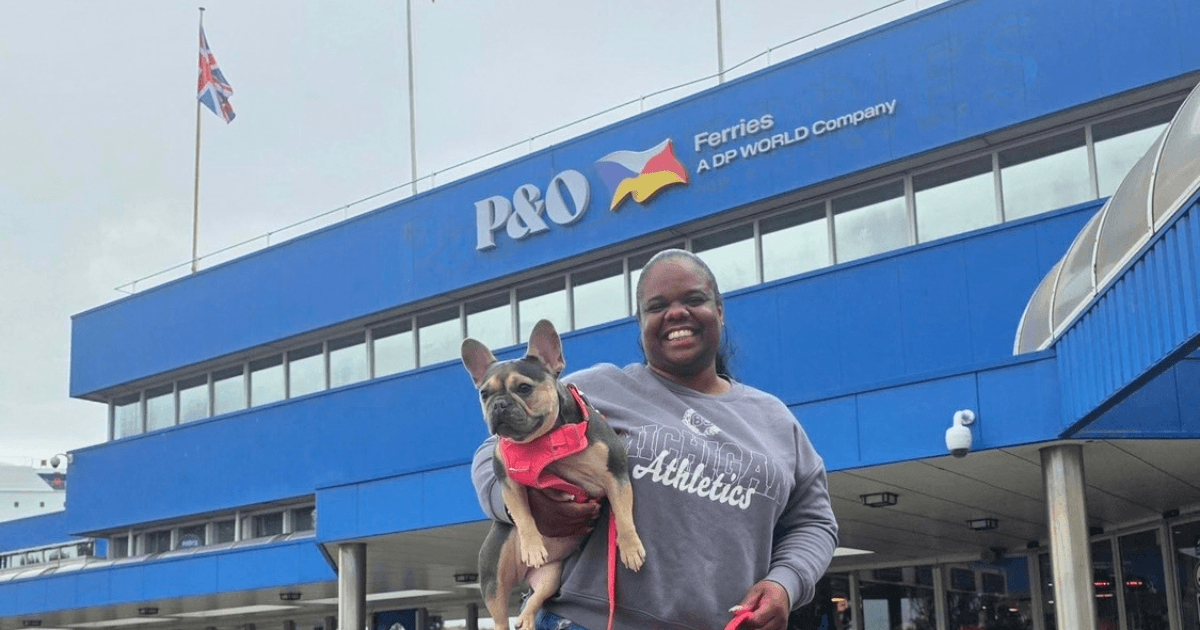
What Shirley had to do before they could board
Arriving by sea is a recognised route, not a loophole. The UK applies the same entry rules it applies at any border, and they have to be completed in order — which is why the work started months before the sailing.
Majesty was already microchipped, which mattered more than Shirley expected: a rabies vaccination only counts if the microchip went in first. Vaccinate before you chip, and the vaccination is void and has to be done again. Then came a waiting period after the vaccination before she was allowed to travel at all.
Closer to departure, the timing got tighter. Dogs entering Great Britain need tapeworm treatment from a vet, and the window is narrow — measured against your arrival in Britain, not your departure from anywhere. Too early and it doesn’t count. Too late and it doesn’t count. For a route with a flight, a transfer and an overnight sailing in it, that means working backwards from the moment the ship docks in Hull.
The rest was documentation: the correct travel document for the country she was flying out of, and a signed declaration that Majesty wasn’t being sold or rehomed.
None of it is unusual. All of it is unforgiving about sequence, which is what catches people who book first and check later.
The current requirements are published by the UK government at gov.uk/bring-pet-to-great-britain, and they change. Confirm them for your own route and departure country before booking.
Boarding
Shirley had never taken an overnight crossing, but her nerves began to ease at the terminal, where she was directed into a separate line of families and other passengers travelling with pets. Majesty’s microchip was scanned and they were waved through ahead of the main queue.
Travelling alone with three suitcases and a dog could have made boarding difficult, but a crew member with a luggage cart helped her on to the ship. Everything but her overnight essentials was then stored in a secure locker for the crossing.
The cabin
The cabin was spotless, the beds were comfortable and P&O had provided food and water bowls for Majesty. Outside there was a deck where dogs could exercise and relieve themselves. Even with all the dogs, the ferry was quieter at night than Shirley expected, and the crossing was so calm it was easy to forget she was on a boat. By the time she and Majesty woke up, they had nearly reached port.
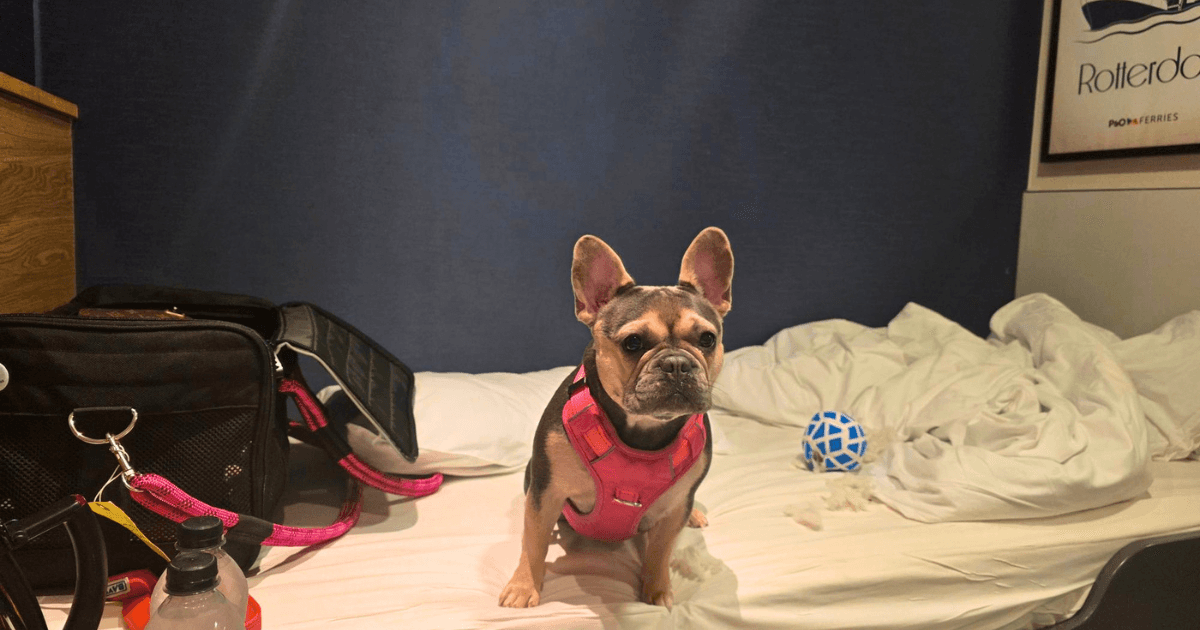
Arrival
Disembarkation began about 15 minutes after the ship reached Hull, with families, children and passengers with pets among the first to leave. Shirley’s bags were loaded back on to a luggage cart and crew helped her through to just before immigration where her passport was stamped, and she and Majesty went on their way.
The experience won Shirley over. She’s considering another crossing with Majesty — this time not because she has to, but because she wants to.
If you’re considering the same route for pet travel
Book your pet’s place when you book your own. Pet spaces are limited and cannot be bought at the port. The six dog-friendly cabins are first come, first served — if they’re gone, it’s the kennels.
Check the kennels fit your dog. Three sizes: up to 20kg, up to 35kg, up to 45kg.
Check in at least 90 minutes before departure. There’s a separate pet check-in, and that’s where documents are verified.
P&O run a free document pre-check. Their team requests copies ahead of travel day and verifies microchip, rabies vaccination, tapeworm treatment and pet parent details. Sorting a problem 24 hours out is a very different situation from sorting it at the desk.
Pets can’t travel on the coach transfers to Rotterdam or Amsterdam. Arrange your own onward transport from the port.
Work out the sequence before you book. Which routes are open to you depends on your departure country, your airline and your dog — and the requirements have to be met in a set order. That’s what PadsPass does: map the routes that work, and what each one asks of you, in what order.
The real takeaway
Majesty was never the problem. The route was.
Most “my dog can’t fly” situations are really “my dog can’t fly that way.” Before you accept the first answer, it’s worth asking what the other ways are — and what each one would require of you, in what order.
Requirements described as at September 2026. PadsPass helps pet parents prepare and organise pet travel documentation. We don’t guarantee airline acceptance, veterinary clearance or entry approval.